

Question: “My team seems to be running inefficiently and I’m not sure how to improve the work culture. Any advice?“
Firstly, thank you for your question and by reading into the way the question is worded we can infer a couple of concepts. The first deduction can be made by understanding that the reader is (maybe unconsciously) tying work efficiency to work culture. The second is that they recognize that there is an issue. These two concepts are critical to making a positive change in your work culture – Recognition and Correlation.

We’ll start with the correlation between work culture and work efficiency. This is tricky balancing act that needs to be done correctly or it can feel hopeless. The first step is to take a deep look at your current processes in place. In my experience, people don’t fail the process nearly as often as the processes fail the people. Let’s say (hypothetically) you work in manufacturing, and you’re manufacturing plastic bottles. Before you can begin to understand if the process is working or not, you need to understand what the process itself is. This sounds crazy, and it did when my boss about seven years ago told me to do it myself, but take 30 minutes to an hour and just watch the process work.
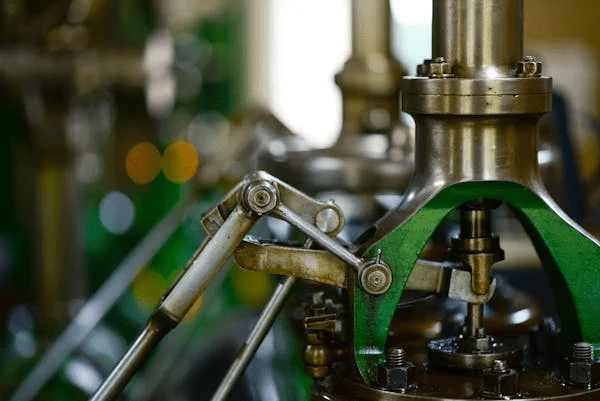
Watch the people, the way they move, the way the end product is produced. You’ll find small things such as “why does that employee have to walk around the far side of the pallet to stack it?” or “why does the operator have to make constant adjustments to the extruder?”. Once you have these process inefficiencies, they you can begin to make improvements and become a better business. You may have noticed I did not once mention work culture, that’s because work culture is a lagging indicator, or result of the work that you put in for your employees. If you make these changes, make your employees lives just a little bit easier, you’ll see the results. Think of it this way, if you had to rewrite your report daily instead of using a template, you’d end up wasting hours and hours weekly doing something that is a waste of time. What if your boss walked out of their office and gave you a template?

Lastly, let’s talk about recognition. I would like to give you kudos, as you are a manager that has recognized that there is an issue. It sounds crazy, but that is the oft overlooked step that is necessary to making an improve. It’s not just about recognizing that there is a problem, it’s recognizing that you do not have the proper tools or experience to fix it at this point in time, and that you need to ask for advice (hence your input to this blog) to try to overcome your problem. Networks are a wildly underutilized tool that will serve you well once you get comfortable using them.

To summarize – Work Culture as a function of efficiency is a lagging indicator. That means to say that if the process is improved and the employees can feel as if you made their lives easier, efficiency (machine uptime) and efficiency (As a function of Work Culture) will improve. It doesn’t take much, turn the pallet around, save a couple seconds, buy that thousand dollar machine part, do the extra PM, to do a 180 on your work culture.
Your message has been sent

 Growth